
Understanding Your Contractor’s Quote: Face Brick vs Plaster Labour Economics
July 13, 2026
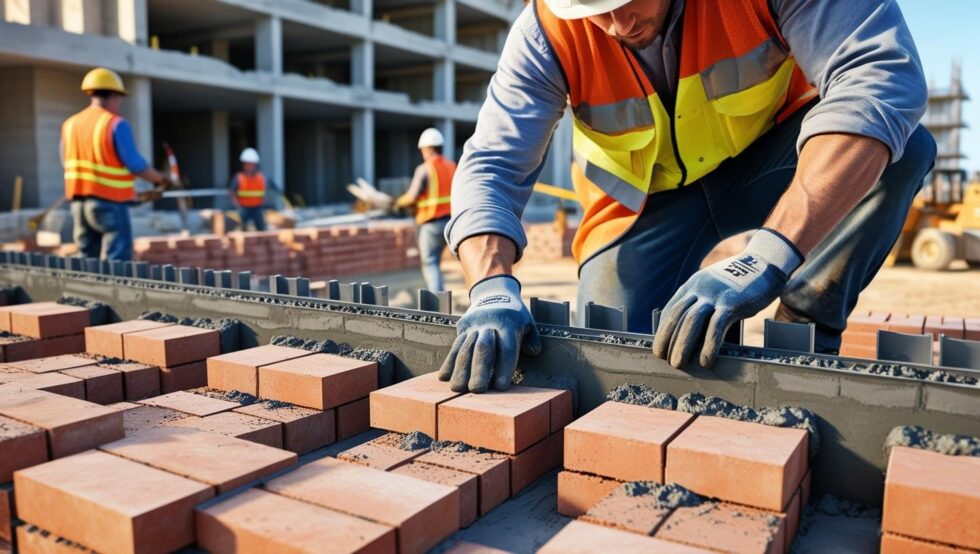
Quick answer: Most building quotes charge a fixed price per square metre for brickwork, regardless of whether stock brick or face brick is used. Behind that fixed price, the contractor’s own labour cost changes significantly between the two, which is worth understanding before you choose.
Pricing note: labour timelines and rate comparisons in this article reflect typical South African market conditions at the time of writing (July 2026) and are for illustration purposes only. Actual costs and timelines vary by region, contractor, and project. Contact Dezyno Bricks for guidance specific to your build.
When you look at a builder’s quote, the brickwork line item is usually a flat rate per square metre or a fixed total, whether you choose stock bricks or face bricks. To you, the number looks the same either way. Behind the scenes, the two choices represent very different labour costs for the contractor, and understanding that gap helps you ask better questions before signing a contract.
The Hidden Math Behind a Fixed Quote
A contractor typically pays site crews a daily rate, but charges the client a fixed price for the completed job. That single fact explains a lot about why plaster gets recommended so often. If a wall can be built faster with cheaper, less specialised labour, the contractor’s margin on a fixed quote improves. If it takes longer and needs a more skilled trade, that same fixed quote leaves a smaller margin.
Daily Wage Labour vs a Fixed Project Price
The Stock Brick Timeline
A general site worker paid a flat daily rate can move quickly on a stock brick wall, since every joint will be covered by plaster later. A 100m² stock brick wall built at pace can sometimes be completed in around 5 working days.
The Face Brick Timeline
A face brick wall does not allow the same shortcuts. Every joint is visible and has to be mathematically consistent, which typically slows the same 100m² wall to around 10 working days when done properly.
Build Method | Typical Labour Type | Approximate Days for 100m² | Why the Time Differs |
Stock Brick and Plaster | General daily-wage labourer | Around 5 days | Joints will be hidden under plaster, so speed is prioritised over precision |
Face Brick | Skilled face brick artisan | Around 10 days | Every joint stays visible and must be laid to a consistent standard |
Why Skilled Face Brick Labour Costs More
Laying face brick well requires an artisan who understands bonding patterns, neat jointing, and precise alignment. This is a different skill set from general stock bricklaying, and in South Africa a properly qualified face brick artisan often costs significantly more per day than a general labourer, sometimes close to double. Combined with the extra days needed, the total labour cost on a face brick wall can be noticeably higher than on an equivalent stock brick wall, even though the client-facing quote may look similar.
What This Means for Your Quote
This is worth raising directly with your contractor rather than assuming the worst. A transparent builder should be able to explain how their brickwork price is structured and why they may prefer one method over another for your specific project. If cost is the deciding factor, our single-skin wall and double-line wall cost breakdowns show that face brick is often close to, or cheaper than, a fully plastered finish once every material and labour stage is counted.
The Long-Term Trade-Off
A stock brick wall built quickly to save on labour days still needs the full plaster, primer, and paint process afterwards, and any inconsistencies in the brickwork tend to surface as cracking once the wall is finished and painted. Our article on the hardware store trap covers why that ongoing maintenance cycle usually costs more over the life of the wall than the time saved during construction.
Frequently Asked Questions
Why does a face brick wall take longer to build than a stock brick wall?
Every joint on a face brick wall stays visible, so it must be laid to a consistent, precise standard from the first course to the last. A stock brick wall will be covered in plaster, which allows faster, less precise work.
Should I ask my contractor why they recommend plaster?
Yes. A straightforward question about labour timelines and costs for each method helps you understand what is actually driving the recommendation, and a transparent contractor should be able to answer clearly.
Does face brick always cost more in labour than stock brick?
Per day, a skilled face brick artisan usually costs more than a general labourer, and the job typically takes longer. Whether that translates into a higher total project cost depends on how much you save by skipping plaster, primer, and paint. See our cost comparisons for the full picture.
How can I make sure my stock brick wall was not rushed?
Ask to inspect the brickwork for plumb, level, and joint consistency before plastering begins. Our guide to what a plastered wall can hide covers exactly what to look for.
Is it reasonable to request a face brick quote alongside a plastered one?
Yes. Most reputable contractors can price both options, and comparing them side by side, including the finishing costs for a plastered wall, gives you a clearer basis for your decision.
Get a Quote From Dezyno Bricks
Dezyno Bricks supplies premium clay face brick, semi-face brick, and plaster brick across South Africa from our yard in Springs, Gauteng. Browse our FBS face bricks range or plaster bricks, call us on 061 538 5968, email sales@dezynobricks.co.za, or message us on WhatsApp to get a quote for your next project.