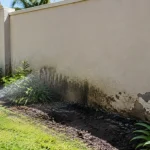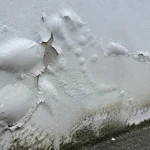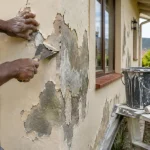

When damp shows up on a plastered wall, the first instinct is to cover it. Hardware stores sell thick rubberised and acrylic coatings with promises of waterproofing, and a couple of coats make the stain disappear almost immediately. The relief rarely lasts. In many cases a coating that seals the surface does more harm than the damp it was meant to hide, and understanding why starts with how a wall deals with moisture.
How a Wall Normally Handles Water
Walls Breathe
No masonry wall is ever perfectly dry. Water vapour moves through brick, mortar, and plaster all the time, passing from wet areas to drier ones and out into the air. A healthy wall depends on that moisture being able to evaporate. Block the evaporation and the water has nowhere left to go.
Where the Moisture Comes From
Damp enters from the ground as rising damp, from the weather as penetrating damp, and from inside the house as condensation. Our guide to what causes damp in brick walls explains each one. A coating does nothing about the source. It only changes what happens at the surface.
What Goes Wrong When You Seal a Damp Wall
Moisture Gets Trapped
A rubberised or acrylic coating forms a film across the surface of the plaster. Moisture that is already inside the wall, or that keeps arriving from the ground, tries to leave through that film and cannot. It builds up behind the coating instead. This pressure of trapped water is sometimes called hydrostatic pressure, and it pushes outward against whatever is sealing it in.
Blisters, Bubbles, and Peeling
The first visible sign is usually bubbling, as pockets of water push the coating away from the plaster. After that the film peels in sheets, taking plaster with it. The damaged patches are usually bigger than the original damp stain, which is why a failed coating costs more to put right than leaving the wall alone would have.
Salts Do Their Damage
Water moving through a wall carries dissolved salts, and when the water cannot evaporate through the surface, the salts crystallise beneath the coating. Growing crystals break the bond between plaster and brick, and the plaster turns soft and powdery. A wall that looked merely damp can end up needing a complete strip-back.
Sealing a Damp Wall Compared With Fixing It
| Approach | What It Does | Typical Result |
|---|---|---|
| Waterproof coating over damp plaster | Seals the surface, ignores the source | Trapped moisture, blistering, peeling |
| Repainting a stained wall | Hides the mark | Stain and peeling return |
| Fixing the source, then redecorating | Stops the moisture | Finish lasts, wall dries out |
The principle that experienced waterproofing specialists keep repeating is to treat the moisture first and finish the wall afterwards. Repainting on its own only hides the problem, and a coating on top of an active damp problem makes it harder to diagnose, because the early warning signs are now under a layer of paint.
Why Paint Cannot Fix Plaster That Is Already Wet
Plaster is porous, as we describe in why cement plaster acts like a sponge, which means it is an easy path for moisture and a poor surface for sealants to hold on to. Add hairline cracks from normal wall movement, and a coating only has to be breached in one spot for water to get in behind it. After that, the coating that was meant to keep water out is holding it in.
This is also why bridging problems stay hidden for so long. Where a plaster coat runs past the damp proof course, a new layer of paint hides the early symptoms while moisture keeps climbing the wall, as we show in how plaster bridges the damp proof course.
Why Face Brick Does Not Need a Sealant
A clay face brick is made to be left exposed. It is fired at high temperatures into a dense body, and it has no film on its surface to trap moisture. Water that enters can dry out again through the brick face, so there is nothing to blister or peel. A face brick wall still needs sound mortar joints and a properly installed damp proof course, but it does not need a coating to cope with the weather.
Some face brick owners do choose to seal certain surfaces, such as paving, to make cleaning easier, and our guide on whether you should seal your paving covers when that makes sense. That is a different decision from using a coating to hide damp.
If you are planning a wall and want the finish to look after itself, browse our face brick range or use the brick calculator. To see how all this feeds into the long-term budget, read what treating damp on plastered walls really costs.
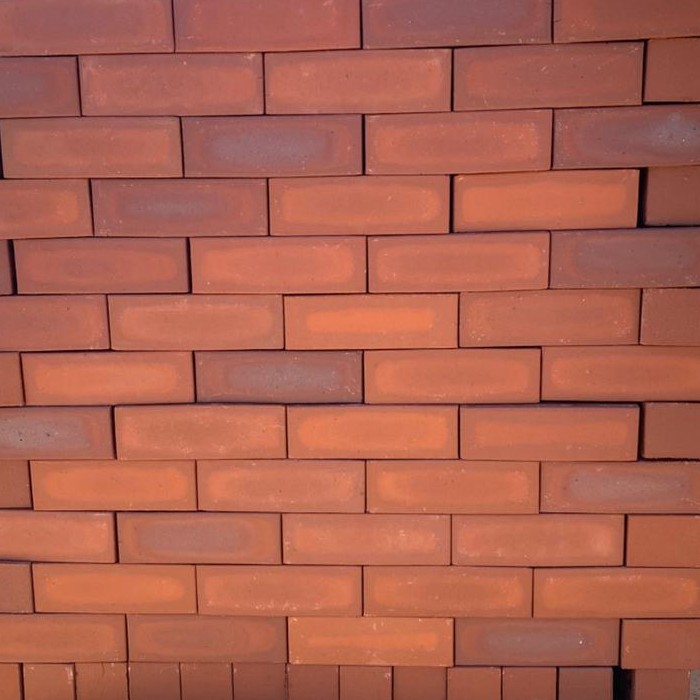
Dezyno Face Brick Range
Premium clay face brick, semi-face brick and pavers. Shown: Redwood Satin Dark.
Frequently Asked Questions
Does waterproof paint stop damp?
Not on its own. A waterproof coating can stop some rain from soaking in from outside, but it does not stop rising damp or moisture already inside the wall, and it can trap that moisture behind the film.
Why does paint bubble on a damp wall?
Water inside the wall pushes outward against the paint film and lifts it away from the plaster, forming blisters. Eventually the film peels and the plaster underneath crumbles.
What should I do before repainting a damp wall?
Find and fix the source of the moisture first, let the wall dry fully, and then redecorate. A professional damp assessment helps if you are unsure of the cause.
Is breathable paint better for damp walls?
Breathable masonry paints allow some vapour to escape, which generally suits damp-prone walls better than a sealing film. They are still not a cure for damp, and the cause has to be dealt with.
Do face brick walls need waterproofing paint?
No. Face brick is designed to be left exposed to the weather and does not rely on a coating. The wall still needs a sound damp proof course and good mortar joints.
Get a Quote From Dezyno Bricks
Dezyno Bricks supplies premium clay face brick, semi-face brick, and plaster brick across South Africa from our yard in Springs, Gauteng. Call us on 061 538 5968, email sales@dezynobricks.co.za, or message us on WhatsApp to get a quote for your next project.