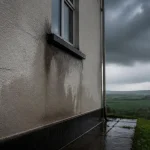

A freshly painted plastered wall looks solid, smooth, and finished. Underneath that paint, though, cement plaster is full of microscopic channels that draw water in the same way a sponge does. Most homeowners only find this out years later, when paint starts bubbling or a stain appears that no amount of repainting seems to cure. Understanding why plaster behaves this way is the first step in understanding most of the damp problems South African homes deal with.
What Makes Cement Plaster So Porous
A Mix Built From Sand, Cement, and Water
Plaster is made from cement, sand, and a generous amount of water so that it can be spread easily on a wall. As the plaster cures, much of that mixing water evaporates and leaves behind a network of very fine channels. These channels are invisible to the eye, but they run right through the plaster layer and give water an easy path in.
How Capillary Action Pulls Moisture Inward
Water moves through those fine channels by capillary action, the same effect that lets a paper towel pull up a spill. Rain falling on the outside face of the wall is drawn inward, and groundwater near the base of the wall is drawn upward. Our guide on what causes damp in brick walls explains the different types of damp in detail, and almost every type starts with moisture finding a porous path like this one.
Fired Clay Face Brick Is Built Differently
A clay face brick starts as shaped clay that is fired in a kiln at very high temperatures. During firing the clay particles fuse together, which tightens the internal structure and leaves a denser, harder surface than plaster can offer. A face brick is not waterproof, and it does still take in some moisture, but it is made to sit exposed to the weather, and water that gets in is able to dry out again because there is no paint skin sealing it inside.
South African clay face bricks are made to SANS 227, and the grade you choose should match where the wall is built. Our article on FBX, FBS, and FBA face brick grades explains which grade suits which job.
Cement Plaster Compared With Fired Clay Face Brick
| Feature | Cement Plaster | Fired Clay Face Brick |
|---|---|---|
| How it is made | Mixed on site from cement, sand, and water | Shaped clay fired in a kiln |
| Internal structure | Open network of fine channels | Tighter, denser structure |
| Reaction to rain | Soaks water in and holds it behind the paint | Takes in some water and releases it again |
| Cracking | Prone to hairline cracks as it cures and moves | Stable when laid with sound mortar joints |
| Upkeep | Repainting and crack repair at regular intervals | No painting needed |
How Hairline Cracks Let Water Lodge Inside the Wall
Shrinkage and Movement
Plaster shrinks slightly as it cures, and it keeps moving a little every day as the sun heats the wall and the night cools it again. Over time this movement opens hairline cracks, especially around windows, doors, and the joints between different building materials. These cracks are often too fine to notice, but water does not need much of a gap.
Where the Water Goes Once It Is In
When driving rain reaches a crack, it soaks into the plaster behind the paint. Paint keeps the surface looking intact, but it also slows the moisture on its way out, which means the wall stays wet for longer than it should. Salts carried in by the water, along with the repeated wetting and drying, slowly weaken the plaster, and eventually the paint blisters or the plaster comes loose in patches. We look at what happens next in our article on how plaster bridges the damp proof course, and at why cheaper walling materials make this worse in why cement stock bricks cause damp. If you want to see how a well-built wall copes with driving rain, read penetrating damp and driving rain.
What This Means When You Build
If a wall will be exposed to rain and ground moisture for decades, the material on its outer face matters more than almost anything else. A plastered finish can work well indoors and in sheltered spots, but for exposed external walls a face brick finish removes the layer that absorbs and traps water in the first place. Our comparison of face brick versus plaster and paint shows how the two stack up when you count the cost over the life of the wall, and what a plastered wall can hide is worth reading before you sign off any plastering job.
If you are planning a new wall or an extension and want the exposed side to look after itself, browse our face brick range or use the brick calculator to work out how many bricks you need.
Frequently Asked Questions
Why does cement plaster absorb so much water?
As plaster cures, the extra mixing water evaporates and leaves a network of tiny channels through the material. Water is drawn into those channels by capillary action, much like water climbing up a paper towel.
Is face brick completely waterproof?
No. Face brick still takes in a small amount of moisture, but it is fired at high temperatures into a denser material that is made to be left exposed. Water that enters can dry out again because there is no paint layer holding it inside.
Can paint make a plastered wall waterproof?
Paint can slow the rate at which water gets in, but it cannot close hairline cracks that open as the wall moves. Once water gets behind the paint, it tends to stay trapped there, which is why plaster often blisters and peels.
Do hairline cracks in plaster really matter?
Yes. Even a very fine crack lets driving rain reach the plaster behind the paint, and repeated wetting and drying gradually weakens the surface. Sealing cracks early prevents bigger repairs later.
Which wall finish is best for areas with heavy rain?
A fired clay face brick finish is a sound choice for exposed walls, because it needs no paint layer and handles repeated wetting and drying well. The right grade depends on your exposure zone, so check the specification before you buy.
Get a Quote From Dezyno Bricks
Dezyno Bricks supplies premium clay face brick, semi-face brick, and plaster brick across South Africa from our yard in Springs, Gauteng. Call us on 061 538 5968, email sales@dezynobricks.co.za, or message us on WhatsApp to get a quote for your next project.