
The Hardware Store Trap: Why “Cheap” Stock Brick Walls Cost You for Life
July 8, 2026
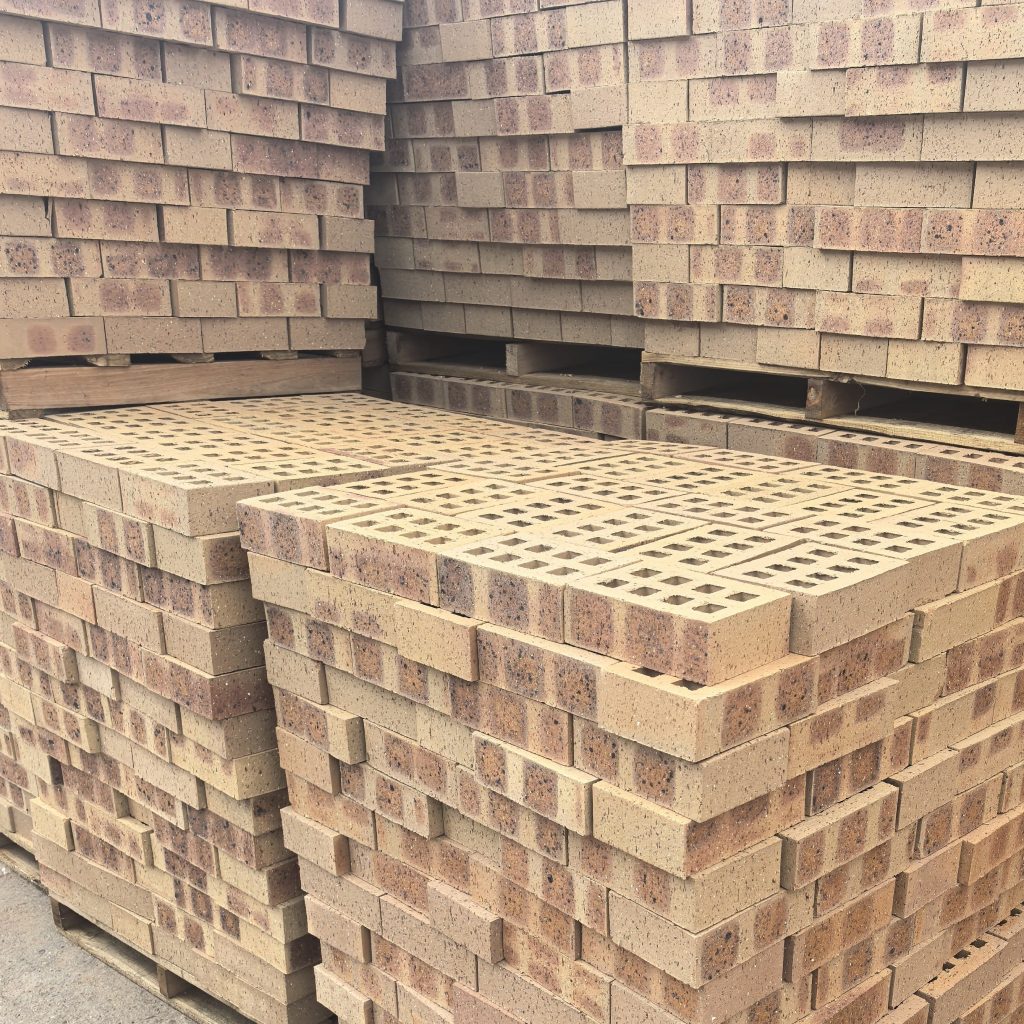
Quick answer: Building a double-line wall entirely from stock brick, then plastering and painting it, is not actually the cheaper option once every material and trade is counted. It costs roughly R64,500 against R70,700 for full face brick, a gap of about R6,200 for a wall that never needs repainting.
Pricing note: figures in this article reflect standard South African material costs and trade labour rates at the time of writing (July 2026) and are for comparison purposes only. Actual costs vary by region, supplier, and project. Contact Dezyno Bricks for a current quote.
Have you ever walked into a hardware store to price a build and felt like the numbers did not quite add up? If you are planning to build your own home, you have probably already spent weeks talking to contractors and comparing prices. Almost everyone gives you the same advice. Buy the cheap stock bricks, put the walls up, then plaster and paint over them later. It will save you a fortune upfront, they say.
It sounds logical. The price tag on a stock brick looks far lower than a premium clay face brick, so the mental math feels like an easy win. But there is a catch nobody mentions until the money has already left your account. That “cheap” plastered wall is not actually cheap. It is the first instalment in a much longer bill.
The Printer and Ink Business Model
Think about how printer companies price their products. The physical printer is sold cheaply, sometimes almost at a loss, because the manufacturer knows you cannot use it without ink. The real profit comes from the ink cartridges you keep buying for years afterwards.
The same pattern plays out on a South African building site. The stock brick is the cheap printer. The plaster, primer, and paint are the ink cartridges you are committed to buying, again and again, for as long as you own the wall.
What You Are Really Buying at the Hardware Store Till
When you build a double-line wall entirely from stock bricks, you are not buying a finished product. You are buying a raw structural shell that cannot survive South African weather on its own. The moment those bricks are laid, you are committed to a chain of further purchases just to make the wall liveable: plaster sand, cement, internal skimming products like Rhinolite, alkali-resistant primer, and multiple drums of exterior paint.
The Liquid Chemical Cost
Raw plaster behaves like a thirsty sponge. A budget tin of paint gets absorbed almost instantly, which usually means three or four coats just to get even colour coverage. To get a finish that actually lasts, most contractors specify premium solvent primers and UV-resistant exterior paint, often R1,500 to R2,000 per 20-litre drum. That cost alone quickly cancels out whatever you saved on the raw bricks.
The Labour Multiplier
A face brick wall needs one trade. A bricklayer builds it, finishes the joints, and the wall is complete when the scaffolding comes down. A plastered wall needs three separate teams: bricklayers to build the shell, plasterers to coat it, and painters to prime and finish it. Coordinating three trades instead of one means more scheduling friction, more wasted material on mixed cement that dries before it is used, and a higher total wage bill.
The Real Numbers: 100m² Double-Line Wall
Building Method | Estimated Total Cost |
Full Plaster and Paint (All Stock Bricks) | Roughly R64,500 |
Hybrid Method (Face Brick Outside, Plaster Inside) | Roughly R67,100 |
Full Face Brick (Inside and Out) | Roughly R70,700 |
The gap between a fully plastered wall and a hybrid wall, where the outside never needs painting again, is around R2,600. The gap to a fully face brick home, inside and out, is only around R6,200. We break down every material and labour line behind these figures in The Hybrid Wall Method.
Why South Africa’s Climate Makes This Worse
South Africa’s climate swings between intense summer heat and heavy seasonal thunderstorms, and plastered walls expand and contract with every cycle. Within two to three years, hairline cracks typically open up. Rainwater gets into those cracks, sits behind the paint, and causes bubbling, blistering, and peeling. Wall construction and plastering in South Africa fall under SANS 10400-K and SANS 2001-EM1, but even a compliant plaster job still ages with the weather. Clay face brick, fired to withstand exactly this kind of exposure, does not carry the same maintenance burden. You can read more about what causes similar surface issues in our guide to efflorescence on face bricks.
Taking Back Control of Your Building Budget
Building a home is one of the biggest financial commitments most South Africans make. It should be an asset that holds its value, not a wall that sends you back to the hardware store every few years for crack filler, primer, and paint. Choosing face brick from the outset, whether through the hybrid method or a full face brick build, is a deliberate way to protect that investment for decades to come.
Frequently Asked Questions
Why do plastered walls crack in South Africa?
South Africa’s temperature swings between hot summer days and cold nights, combined with seasonal heavy rain, cause plaster to expand and contract repeatedly. This thermal cycling typically produces hairline cracks within two to three years.
How often do I need to repaint a plastered exterior wall?
Most plastered exteriors in South Africa need repainting every three to five years, depending on exposure to sun and rain. Coastal and high-exposure inland properties often need it sooner.
Is face brick really maintenance free?
Face brick does not need painting or plastering and holds up well against South African weather over decades. Occasional cleaning to remove efflorescence or cement staining is still worthwhile.
Does Dezyno Bricks supply for hybrid and full face brick builds?
Yes. We supply premium face brick, semi-face brick, and plaster brick for single-skin walls, double-line hybrid walls, and full face brick builds across South Africa. Browse our FBS face bricks range, semi-face bricks, and plaster bricks, or use our brick calculator to plan your quantities.
Get a Quote From Dezyno Bricks
Dezyno Bricks supplies premium clay face brick, semi-face brick, and plaster brick across South Africa from our yard in Springs, Gauteng. Call us on 061 538 5968, email sales@dezynobricks.co.za, or message us on WhatsApp to get a quote for your next project.